









Top things to do in Madrid

Quick overview

  • Access: Included in all Royal Palace of Madrid tickets
  • Separate ticket: Not required
  • When you'll see it: Midway through the official palace route
  • Visit duration: 10–15 mins self-guided/15–20 mins with guide
  • Best time: Early morning weekdays or late afternoon slots
  • Restrictions: No photography or video permitted. Do not touch the decorative barriers.
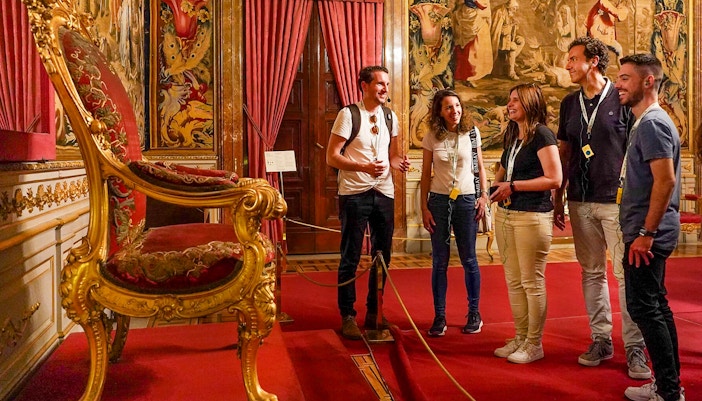
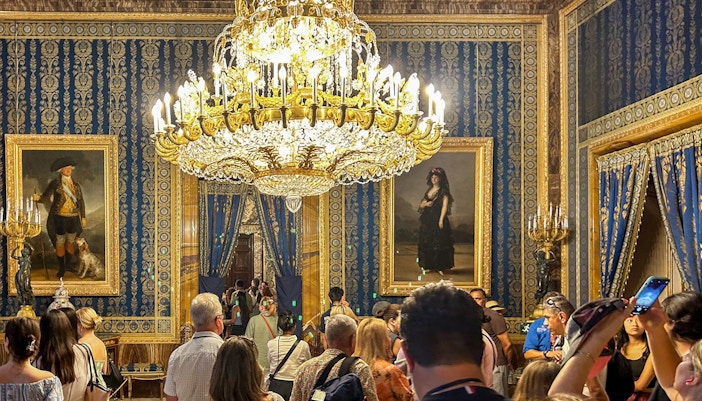
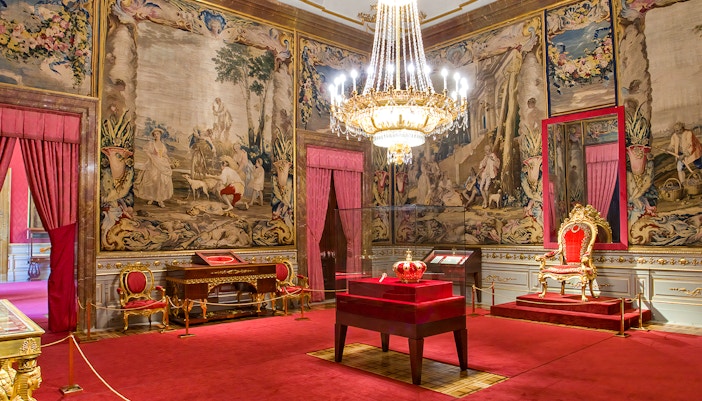
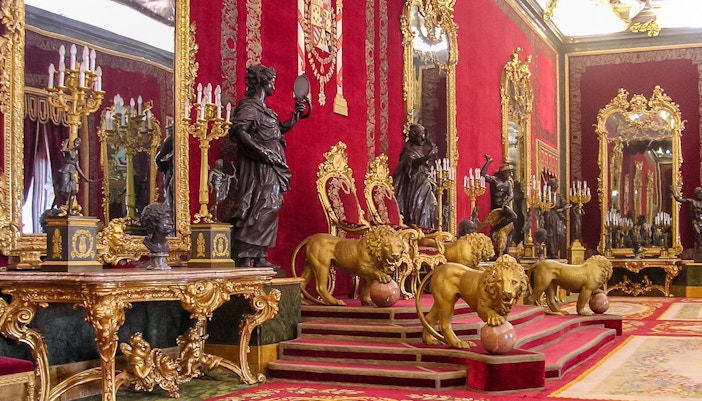
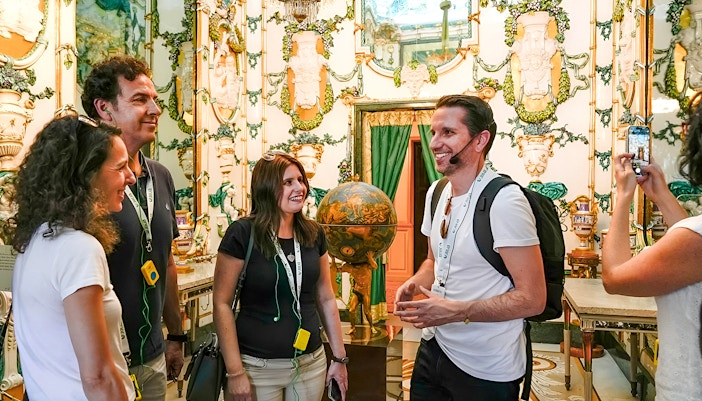
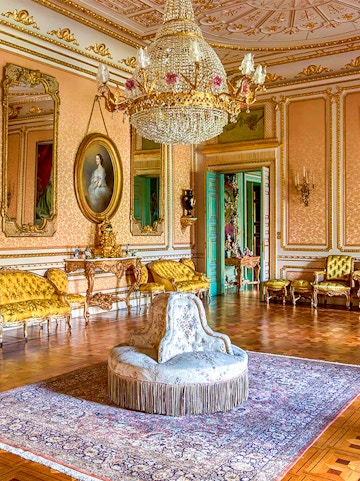
Interior of Royal Palace of Madrid with ornate decor, chandeliers, and antique furniture.

The Throne Room is included with all Royal Palace of Madrid tickets; no separate ticket exists to access this specific hall. It sits midway through the official visitor route, directly accessible after moving past the Hall of Halberdiers. Book an early-access ticket or a guided tour to step into this opulent space before peak midday crowds slow your pace through the ceremonial rooms.

How to best experience the Throne Room

Best time to visit

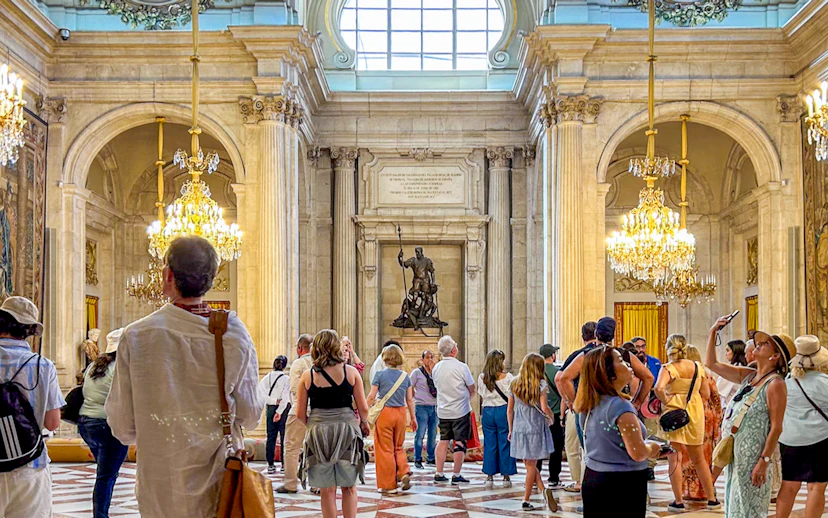
The first morning slot (10am) on a Tuesday or Wednesday offers the quietest experience. Midday crowds create a bottleneck at the entry doors, making it difficult to step back and view the ceiling fresco without being bumped along by the crowd flow.

How long to spend

Spend 10 to 15 minutes if self-guided, or up to 20 minutes with a guide. A quick walk-through misses the intricate details of the bronze sculptures and the hidden symbolism in the vault artwork; pacing yourself reveals the room's true symmetry.

Where it fits in your itinerary

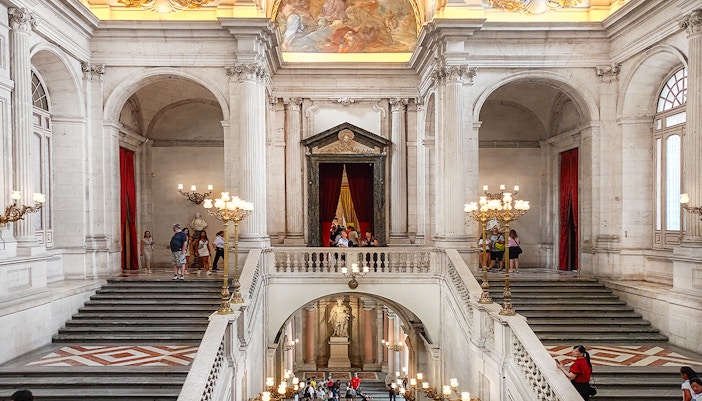
Located in the main ceremonial core, it appears right after you explore the Hall of Halberdiers. Because you will have climbed the grand staircase and passed the initial antechambrs, take a moment to rest your eyes before tackling the massive Gasparini Room immediately following it.

Crowd patterns

Crowds peak heavily between 11:30am and 2pm. The room becomes loud, and security personnel strictly enforce the no-photography rule, causing movement to stall. Visiting after 4:30pm offers a significantly calmer atmosphere with softer, atmospheric natural light.

What to prioritise if time is short

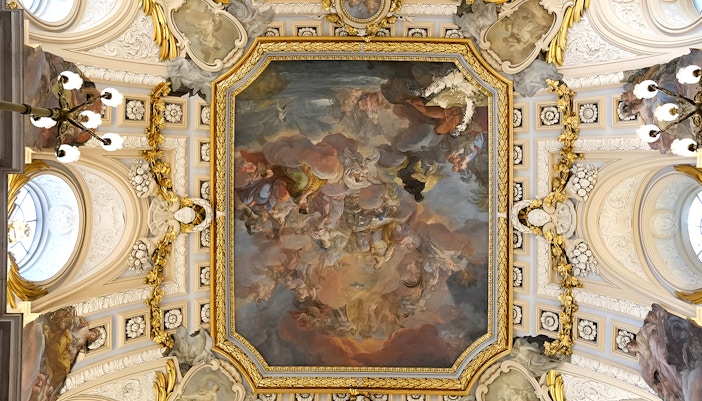
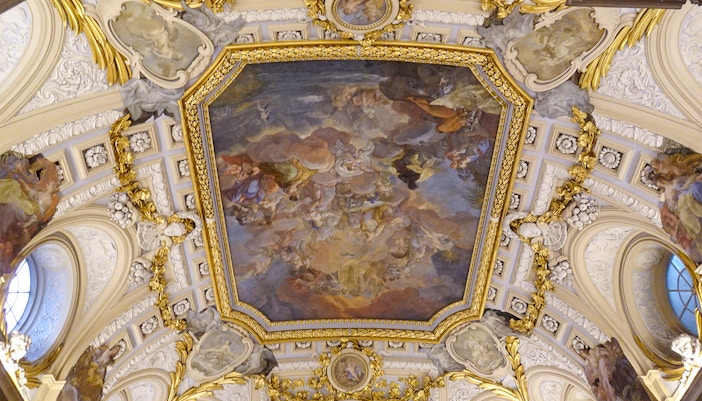
Stand directly in the center of the room to view the massive ceiling fresco by Tiepolo. From this vantage point, you can simultaneously eyeball the symmetry of the four gilded bronze lions guarding the raised platform and the oversized mirrors reflecting the crystal chandeliers.

Common mistakes to avoid

Most visitors only look straight ahead at the royal chairs and move on. Look up immediately upon entering to view the ceiling, and check out the base of the mirrors to see the exquisite craftsmanship from the Royal Glass Factory of La Granja.

Best tickets to experience the Throne Room

Ticket typeWhy choose it

Skip-the-line

Bypass the long exterior queues and reach the ceremonial rooms with your energy intact.

Guided tour

Decode the political symbolism of the ceiling fresco and the history of the Italian-crafted furnishings.

Early access

Stand in the majestic hall with fewer tourists, allowing for unobstructed views of the royal dais.

Why it's worth seeing

The Throne Room (Salón del Trono) is the only room in the entire palace that completely retains its original 18th-century Rococo decorative scheme, exactly as chosen during the reign of King Charles III. While other spaces were modernized by subsequent monarchs, this hall remains frozen in time. A surprising detail is that the deep red velvet covering the walls isn't Spanish—it was woven and embroidered with silver-gilt thread in Genoa, Italy, to project supreme imperial wealth.

The Ceiling: The apotheosis of the Spanish monarchy

Look up to view the final masterpiece of Venetian painter Giovanni Battista Tiepolo, completed in 1766 when he was 70 years old. It depicts the vastness of the Spanish Empire, using allegorical figures to represent the provinces and cultural virtues under the Crown.

The Guarding Lions

Flanking the steps of the throne platform are four gilded bronze lions. These statues have survived historical turmoil; they were originally cast in 1651 under the supervision of painter Diego Velázquez for an earlier palace, making them older than the room itself.

La Granja Mirrors and Venetian Chandeliers

The room features enormous mirrors manufactured at the Royal Glass Factory of La Granja. Positioned directly opposite one another, they create an illusion of infinite space, illuminated by twelve heavy Venetian rock-crystal chandeliers hanging from the gilded vault.

Historical & cultural significance

Designed by architect Giovanni Battista Sacchetti and completed in 1772, the Throne Room was built to serve as the ultimate theatrical stage for Spanish royal authority. Charles III first utilized the space to receive foreign ambassadors, establishing a strict court etiquette that lasted for generations. While the current royal family resides at the Zarzuela Palace outside the city center, this room still serves its original purpose today, hosting official state dinners, ambassadorial receptions, and solemn royal ceremonies presided over by King Felipe VI.

Know before you go

  • Summer hours (April to September): Monday to Saturday 10am to 7pm; Sundays 10am to 4pm.
  • Winter hours (October to March): Monday to Saturday 10am to 6pm; Sundays 10am to 4pm.
  • Box office closure: Ticket sales and palace entry close strictly one hour before the official closing time.
  • State closures: The room closes unexpectedly for official state acts, foreign dignitary visits, or military ceremonies. Always verify the weekly schedule on the Patrimonio Nacional website.
  • Nearest metro station: Ópera (Lines 2 and 5), located a 5-minute walk from the main visitor entrance.
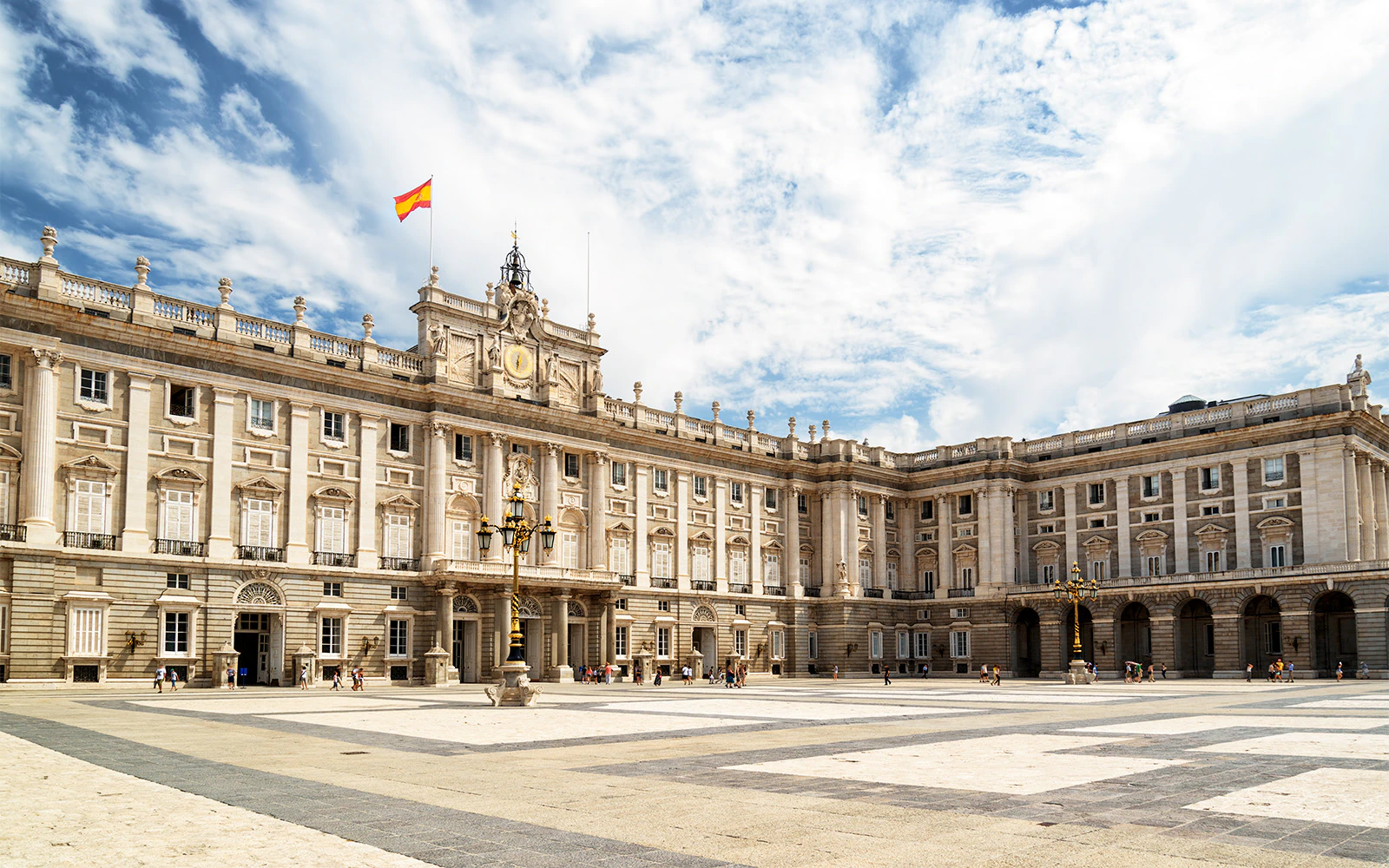
  • Palace entrance: Access the complex through the main visitor gate at Plaza de la Armería.
  • Position on the route: Located in the first half of the upper-floor tour layout, past the Grand Staircase.
  • Internal navigation: Visitors must follow a one-way path through the state apartments; you cannot return to the room once you exit into the residential quarters.
  • Step-free access: Fully accessible via standard elevators designed to bypass the historic grand staircase steps.
  • Staff assistance: Inform security personnel at the main gate to access the dedicated elevator routes.
  • Room flooring: Flat, polished marble layout that accommodates manual and motorized wheelchairs easily.
  • Rest spaces: Sitting or leaning on the historical balustrades or structural walls inside the hall is strictly prohibited.
  • Photography ban: Taking photos, recording video, or using selfie sticks is strictly forbidden inside the room to protect the textiles.
  • Baggage limits: Backpacks and bags larger than 30x30 cm must be stored in the palace cloakroom lockers before entering.
  • Tactile restrictions: Do not cross the protective ropes or touch any gilded furniture, clocks, or wall fabrics.

Frequently asked questions about the Throne Room

Yes. Every standard admission or guided tour ticket grants you access to the official palace route, which goes directly through the center of the hall.

More reads